
Roof Inspections in Raleigh & Wilmington, NC
On Tops Roofing has been inspecting roofs across North Carolina since 1991. Our inspectors are trained to identify problems that most homeowners and even some contractors miss. Whether you are a homeowner who wants to know the real condition of your roof, a real estate agent who needs a professional assessment before listing, or a buyer who wants to know what you are getting into before closing, we provide thorough, honest inspections with detailed photo documentation.
Homeowners requesting a bid for repair or replacement always receive a free inspection. If you just need an independent assessment without a repair quote, we offer standalone paid inspections as well.
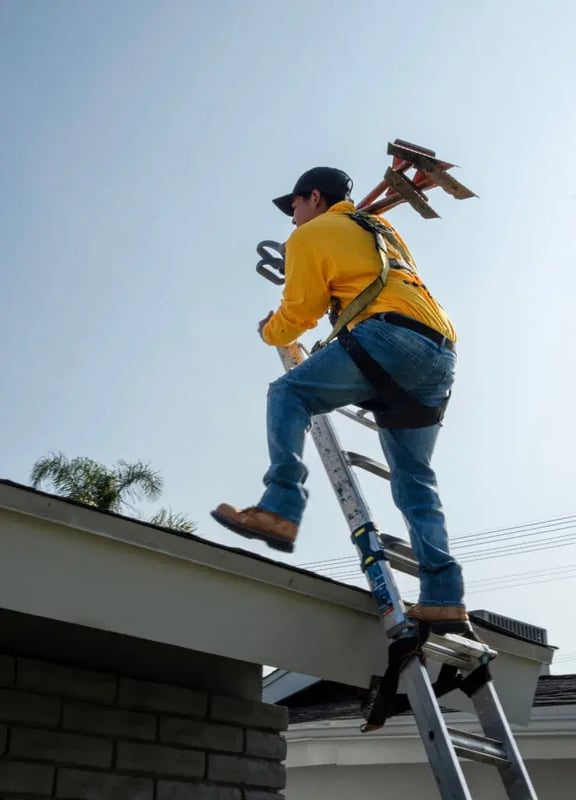
Our team is trained in professional roof inspection techniques and holds certifications through the National Roof Certification and Inspection Association. That training means we know how to identify not just obvious damage but the early warning signs that most people walk right past. When we get on your roof, you can trust that the report you receive reflects a thorough, systematic evaluation of every component.
What We Inspect
Every On Tops inspection is a full-condition assessment of your roof. We check the components that matter most for longevity and performance, looking not just for problems today but for anything that could become a problem in the next few years. After the inspection, you receive a written report with photos documenting every finding.
- Shingle condition
- Step & counter flashing
- Drip edge & starter strip
- Ventilation & attic airflow
- Masonry & chimney
- Pipe boots & penetrations
- Valleys & ridge caps
- Gutters & drainage
- Decking & structure
- Algae, moss & debris
- Kick-out flashing at wall transitions
- Shingle tab adhesion & seal strips
- Nail pops & fastener placement
- Attic ventilation balance
See What Your Report Looks Like
Every inspection comes with a detailed written report including photos and recommendations. Download a sample to see the level of documentation you will receive.
Request a Roof Inspection
Tell us a little about your property and what prompted the inspection. We will get back to you within one business day to schedule.
What We’re Looking For
A checklist only tells half the story. Here is what our inspectors are actually trained to find, why each issue matters to your home, and what happens if it goes unaddressed. The photos below are from real On Tops Roofing inspections.
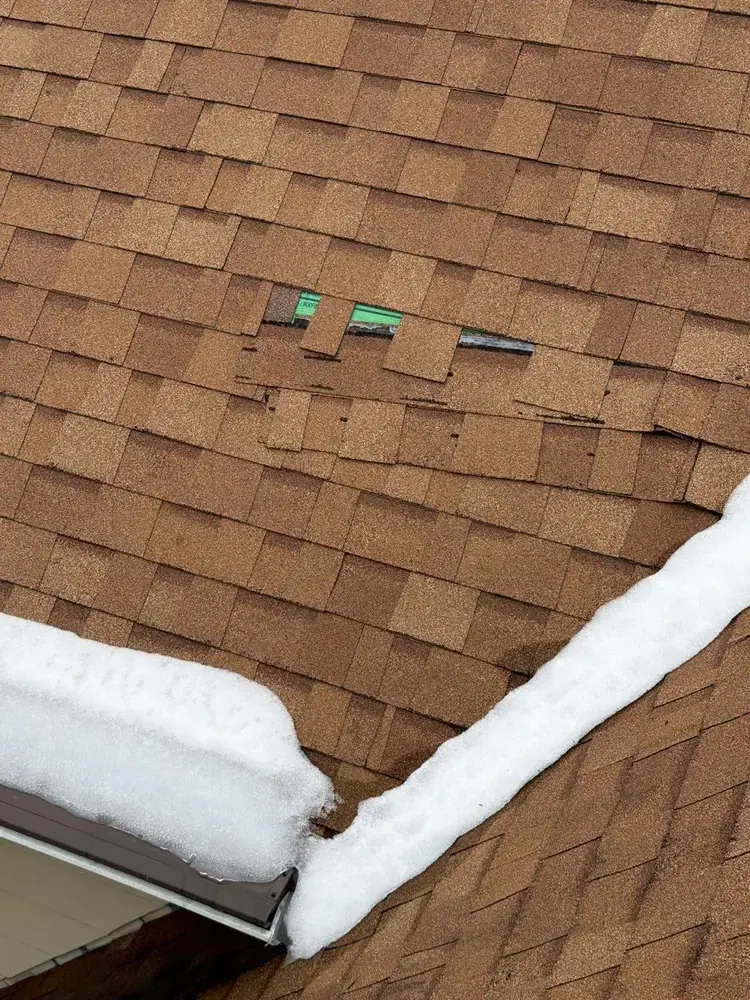
Missing Shingles
A missing shingle is one of the most obvious signs of a roof problem, but homeowners often do not notice them because they cannot see their roof from ground level. Shingles can blow off in storms, slide out of position as the adhesive strip fails, or break free when the nail placement was too high during installation. Even a single missing shingle creates an exposed area where water reaches the underlayment or decking directly with every rain. We document every missing or displaced shingle, its location, and what likely caused it.
Why it matters: The underlayment beneath a missing shingle is a temporary barrier, not a permanent one. Left exposed, it degrades quickly in UV light and begins letting water through within a few months.
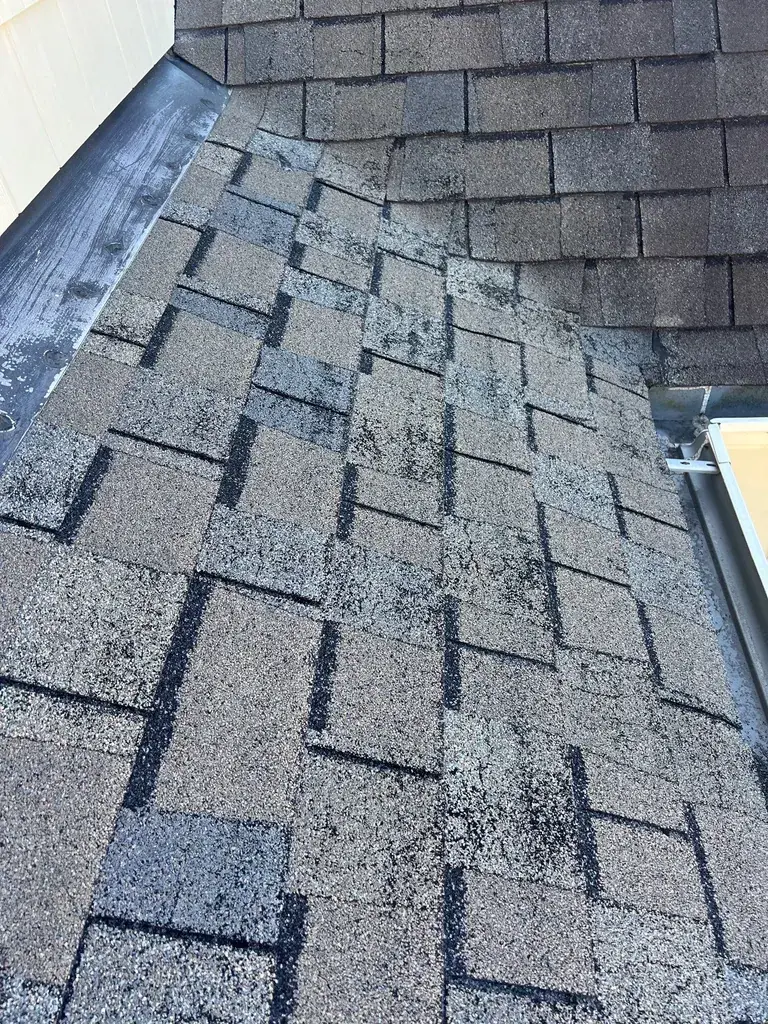
Granule Loss
The ceramic granules on your shingles are not just cosmetic. They are the shingle's primary defense against ultraviolet radiation. When granules wear away, the underlying fiberglass mat is exposed directly to the sun and degrades rapidly. A roof that looks like it has "a few more years left" from the ground can actually be losing protection fast if granule loss is advanced. We check every slope, paying close attention to south- and west-facing sections that take the most UV exposure in North Carolina's long summers.
Why it matters: Once the fiberglass mat is exposed, shingles become brittle and crack. What starts as cosmetic wear becomes a leak path within one to two seasons.
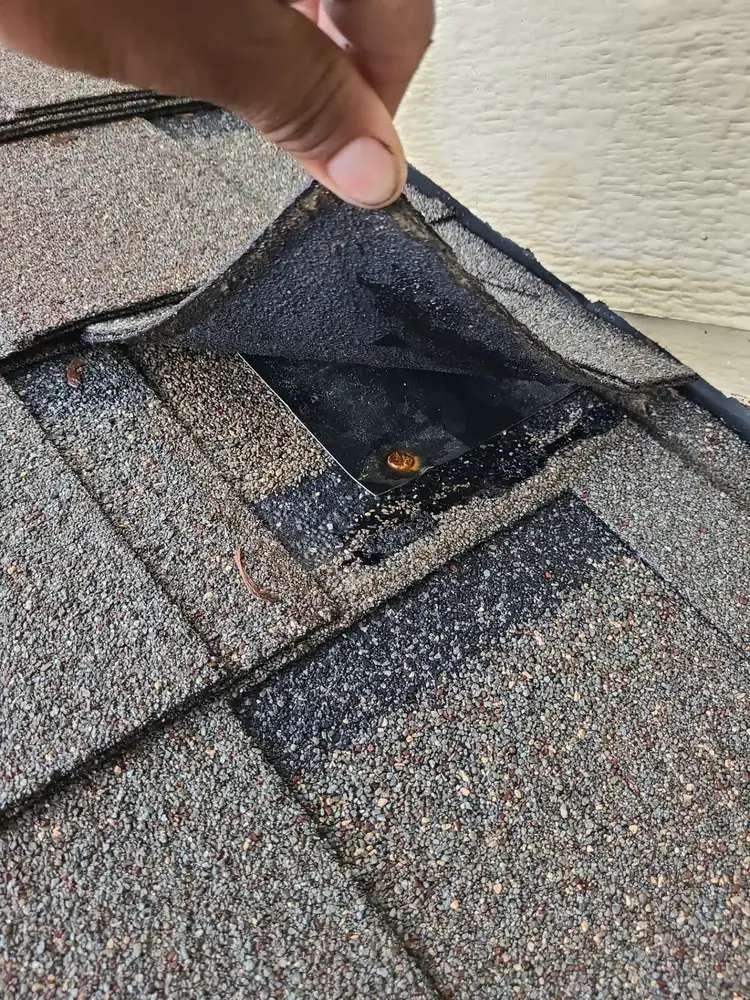
Flashing Deterioration
Flashing is the metal or sealant material that waterproofs the joints where your roof meets a wall, chimney, skylight, or valley. It is one of the most common sources of leaks because the sealants used on flashing do not last as long as the shingles themselves. Caulk-based sealants around chimney and wall flashing can crack and separate in as few as five years, long before the shingles show any wear. We inspect every flashing joint for separation, corrosion, and improper lapping.
Why it matters: A pinhole gap in flashing sealant allows water behind the shingles where it soaks into the decking and framing. These leaks are slow and invisible until the damage is significant.
Soft or Sagging Decking
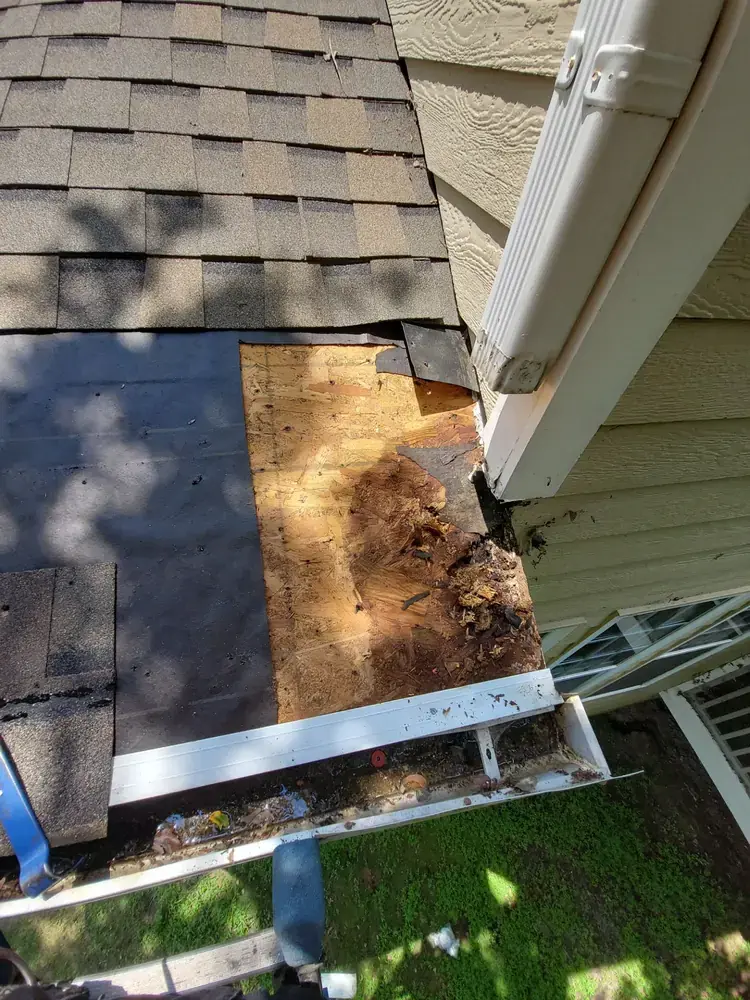
When we walk your roof, we can feel areas where the decking gives underfoot. That soft, spongy feeling is a clear sign that water has been getting under the shingles, sometimes through a path as small as a single nail hole or a hairline crack in sealant. The leak may be so small that it never shows up inside your home, but the decking absorbs that moisture over months and years until the plywood begins to delaminate and rot. We check for soft spots across the entire surface, paying special attention to areas around penetrations and valleys where water concentrates.
Why it matters: Soft decking means structural damage is already underway. Caught early, it may be a small area of decking to replace. Left alone, it spreads and eventually requires a much larger repair during a future replacement.
Pipe Boot Failure
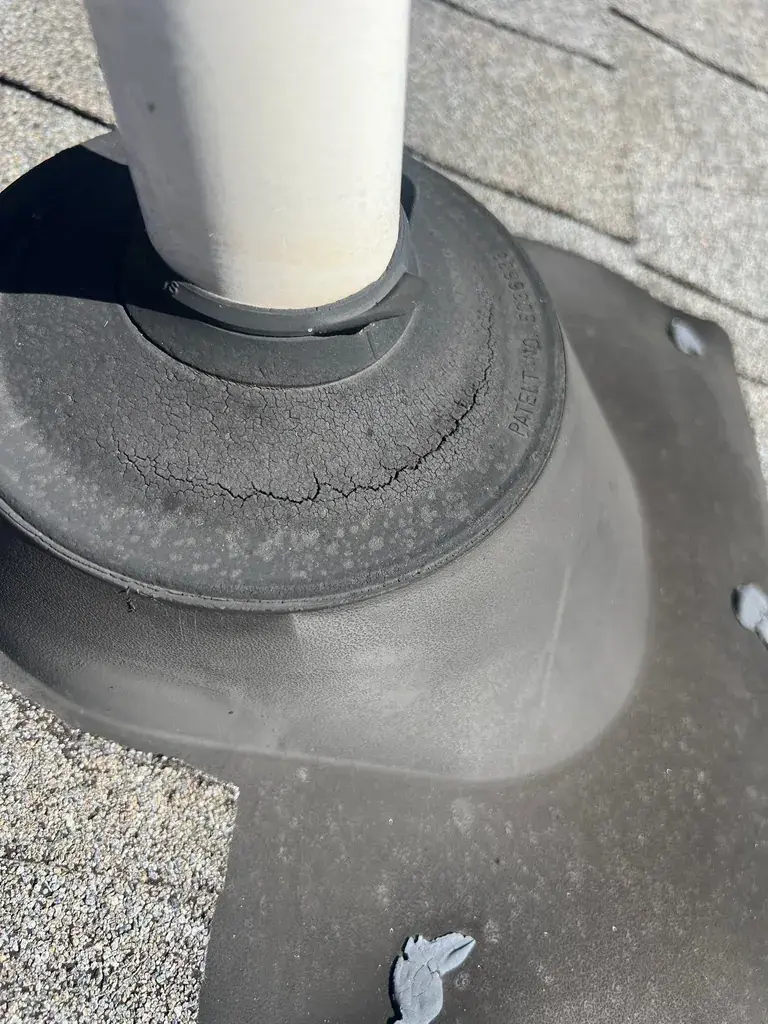
Every plumbing vent that exits through your roof has a rubber or neoprene boot that seals the pipe to the shingles. These boots are the single most common source of roof leaks we find. Depending on the brand and how they were installed, they deteriorate in around six to ten years. The rubber dries out, cracks, and separates from the pipe, creating an open path for water straight into your attic. We find pipe boot issues on the majority of homes with roofs older than eight years. Most homeowners have no idea this is happening because the boots look intact from the ground.
Why it matters: A failed pipe boot is an active leak. Water follows the pipe down into the wall cavity or ceiling below. The fix is straightforward if caught, but the water damage from years of a slow drip is not.
Ridge Cap Cracking
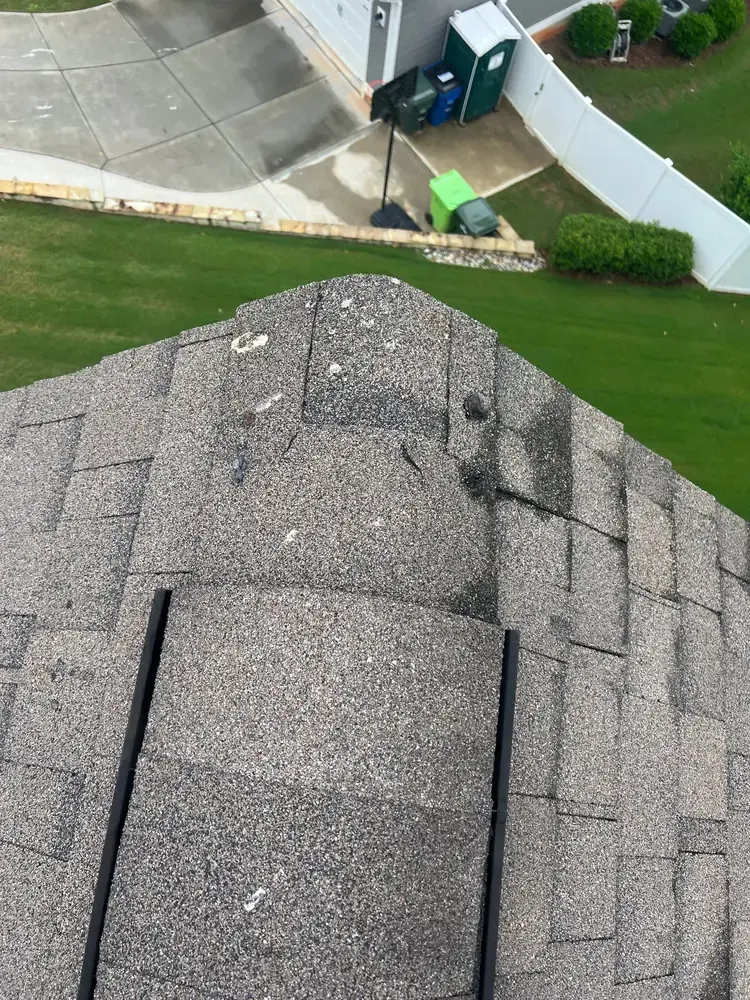
The shingles bent over the peak of your roof take more abuse than any other part of the system. They are folded over the ridge, which puts stress on the material, and they sit at the highest point where UV exposure and heat are most intense. Over years of North Carolina's summer heat cycles, these ridge cap shingles crack along the fold line. The cracks let water into the ridge vent and down into the attic space. This is one of the first areas to fail on an otherwise healthy roof, and it is almost impossible to see from the ground.
Why it matters: Cracked ridge caps are an active vulnerability at the highest point of your roof. Water entry here runs downhill inside the attic and can show up as a stain far from the actual source, making the leak hard to trace.
Missing Kick-Out Flashing
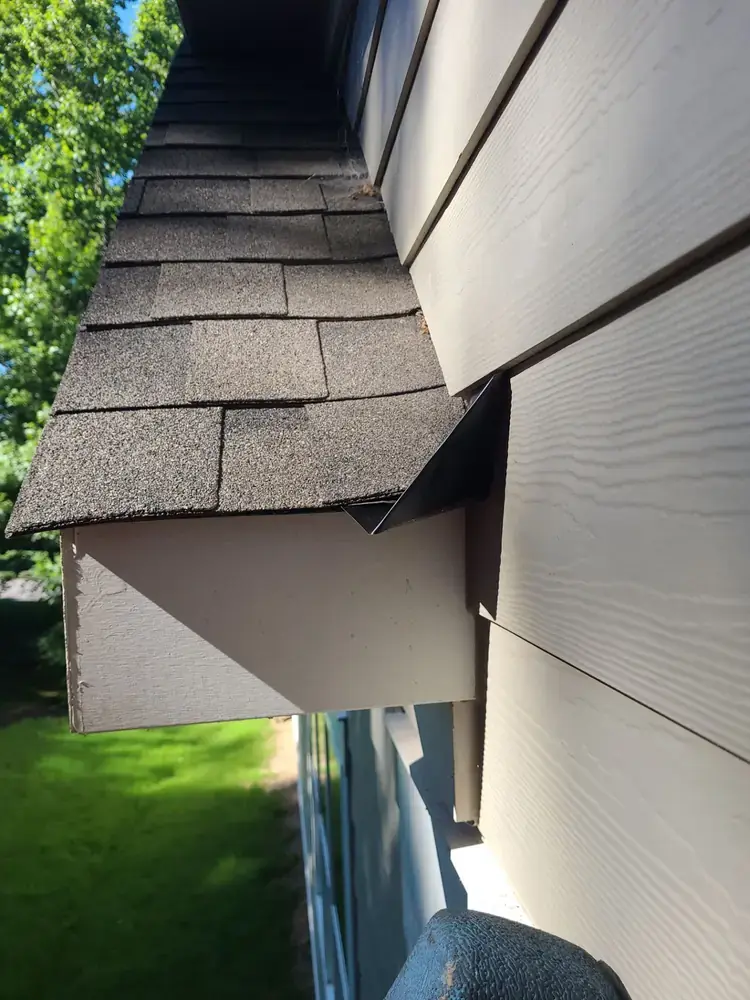
Where a sloped roof edge meets a sidewall, a small piece of flashing called a kick-out diverter is supposed to redirect water into the gutter instead of letting it sheet down behind the siding. This detail is missing on a surprising number of homes, including newer construction. Without it, water runs behind the siding and soaks into the wall sheathing and framing. In North Carolina's humidity, that trapped moisture creates ideal conditions for mold and wood rot inside the wall cavity. The damage is completely invisible from outside until it is advanced.
Why it matters: A $150 flashing detail, when missing, leads to $5,000 to $15,000 in wall repairs once the rot reaches the framing. We flag this on every inspection because catching it early is the difference between a minor fix and a major project.
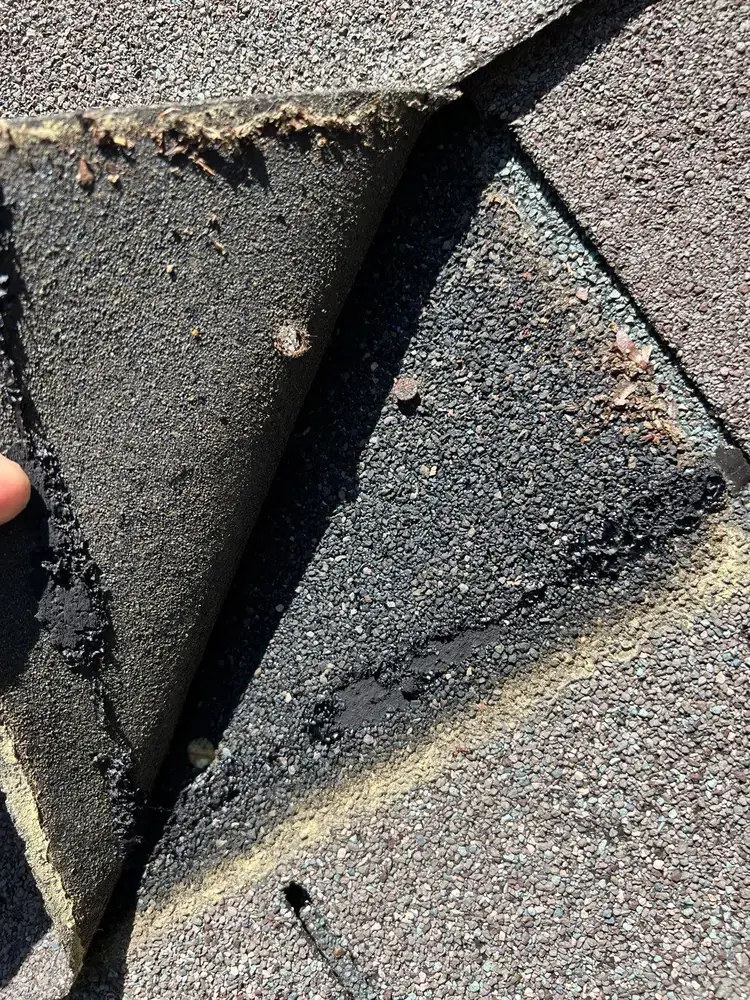
Nail Pops & Fastener Problems
Temperature swings cause your roof decking to expand and contract, and over time this pushes nails back out through the shingles. These "nail pops" create a small raised bump that breaks the shingle's water seal and can puncture through the shingle above, creating a direct leak path. You cannot see nail pops from the ground, but our inspectors can feel them underfoot when walking the roof. We also check for evidence of high nailing, where nails were placed above the manufacturer's specified nail line during the original installation. High-nailed shingles have significantly less wind resistance and can void your manufacturer warranty.
Why it matters: A roof with nail pops or improper nail placement may fail in a 60 mph wind event rather than withstanding the 110+ mph rating it was designed for. This also affects insurance claims and warranty coverage.
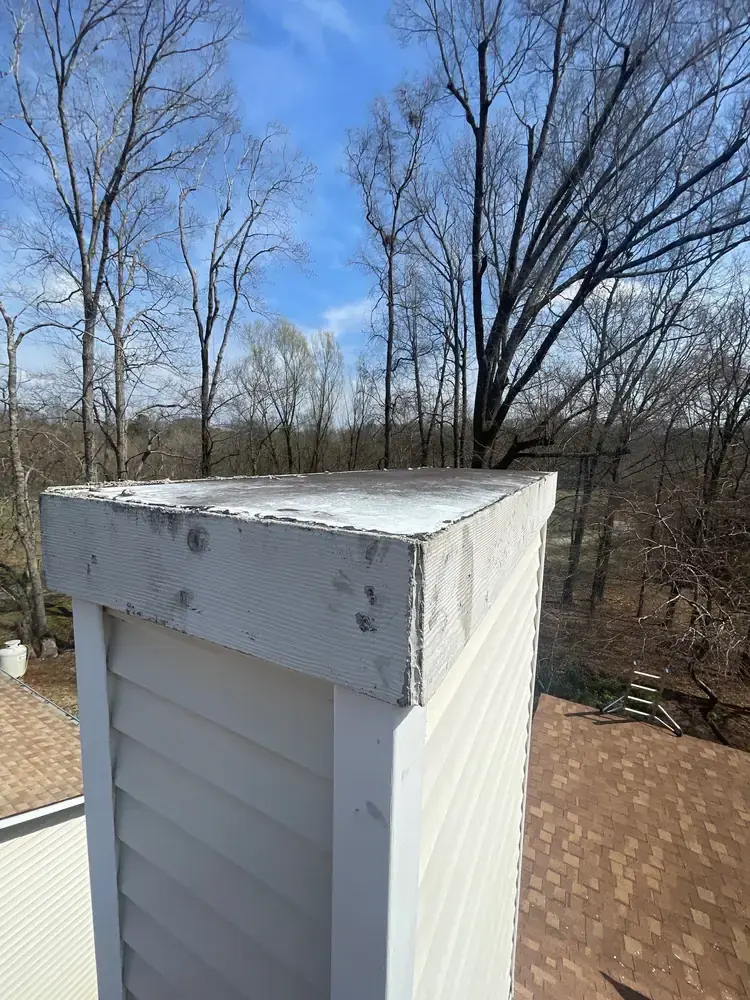
Roof Accessories
Your roof has more on it than just shingles. Chimney caps, satellite dish mounts, dryer vents, slant-back exhaust vents, powered attic fans, natural gas appliance vents, and other accessories all penetrate or sit on the roof surface. Every one of them creates a potential failure point, and most of them develop problems well before the shingles around them show any wear. Chimney caps rust and lose their screens. Satellite dish lag bolts corrode and their sealant cracks. Dryer vent hoods develop leaks at the nail penetrations and where the shingle seal meets the hood. Plastic slant-back vents crack over time, and any exposed nails on them will eventually leak. We check every accessory on your roof because these are often where the first problems start.
Why it matters: A failed chimney cap lets water and animals into your flue. A corroded satellite mount becomes a direct leak path. These are small, inexpensive fixes when caught early, but they cause real damage if ignored for years.
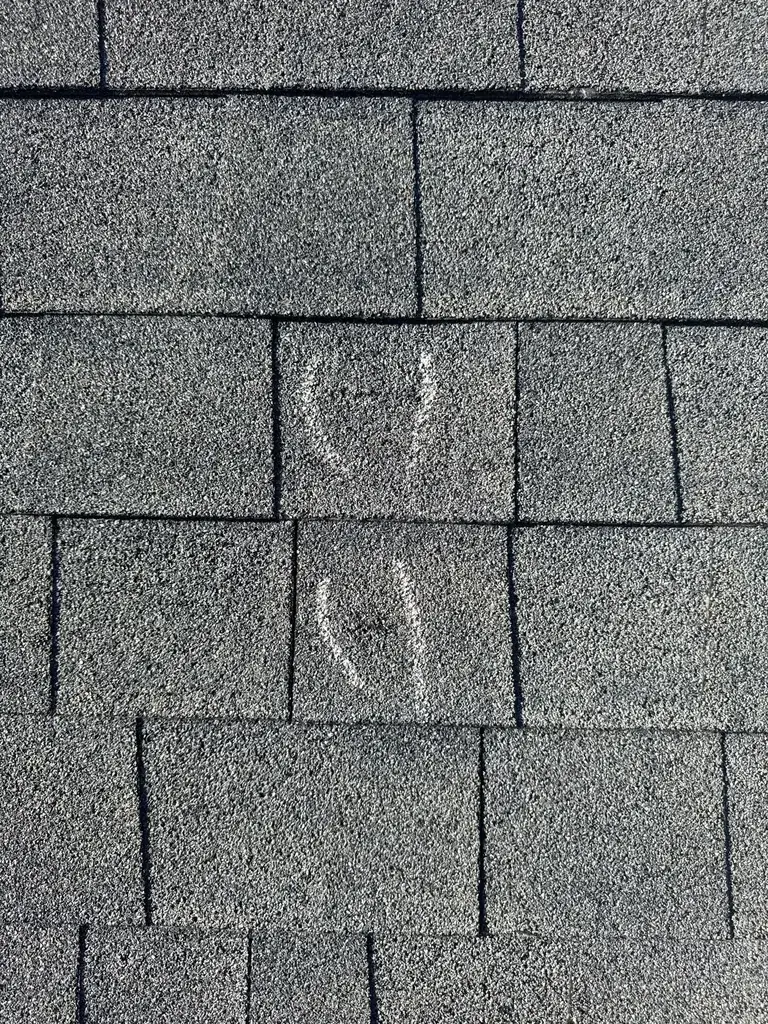
Storm Damage
Hail, wind, and falling debris leave marks on shingles that are nearly invisible from the ground but obvious up close. Hail impacts bruise the shingle surface and knock granules loose in circular patterns. High winds lift shingle edges and break the adhesive bond, leaving tabs vulnerable to the next storm. Fallen branches can crack shingles without displacing them, so the roof looks fine from your driveway while water seeps through hairline fractures with every rain. After any significant storm in North Carolina, we recommend an inspection even if you do not see obvious damage from the ground.
Why it matters: Insurance claims for storm damage have filing deadlines, and undocumented damage gets harder to attribute to a specific event as time passes. A timely inspection with photos gives you the documentation you need if you decide to file a claim.
Know Your Roof’s Real Condition
Free inspections for homeowners requesting a bid. Detailed photo reports for every inspection.