Gutter Installation in Raleigh, NC

If your gutters overflow, pull away from the house, or stay packed with leaves, water ends up where it should not. On Tops Roofing installs seamless gutters, replaces worn systems, adds gutter guards, and handles gutter repairs for homeowners across Raleigh, Cary, Durham, Wilmington, and surrounding areas. We will look at your drainage setup, explain what is causing the problem, and give you a clear estimate for the right fix.

1991 Serving NC since
750+ Google reviews
15,000+ Customers served
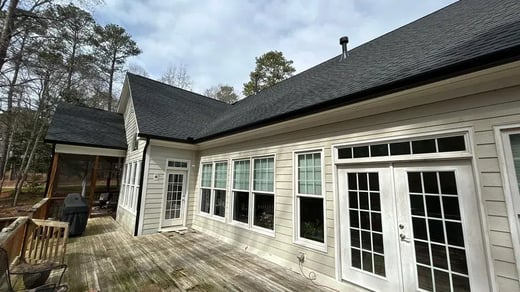
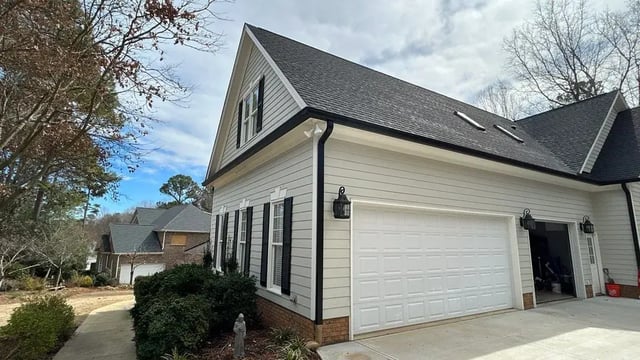
Front exterior of a home with newly installed gutters along the roofline

How Our Gutter Services Work

Whether you need new gutters, better protection from pine needles, or help fixing a leak, we’ll help you find the right fit for your home.

Seamless Gutter Installation or Replacement

We install gutters for the first time or replace failing systems that leak, sag, or simply do not handle the water your roof sheds. If your home does not have gutters yet, or your current system is undersized, we replace it with new seamless 6-inch aluminum gutters sized to perform better in heavy rain.

Your new system includes downspouts and color options so it works properly and looks right on the house. The goal is simple. Capture water cleanly and move it away before it can damage siding, fascia, landscaping, or the foundation.

  • New seamless 6-inch aluminum gutters
  • Downspouts included as part of the system
  • Built for homes with no gutters or undersized gutters
  • Multiple color options available
Gutter Guards

Gutter guards are the perfect compliment to a new set of gutters. We install Leaf Relief by Ply Gem because after testing a lot of options, it has been the best fit for North Carolina homes, especially where pine trees are a constant problem.

Leaf Relief has the right balance of affordability, durability, and performance. Micro-mesh products tend to get trapped up with pine needles, but this system does a better job helping debris shed off the roof instead of collecting at the guard.

  • Leaf Relief by Ply Gem
  • Better fit for North Carolina pine needles
  • More practical than micro-mesh for many local homes
  • Pairs naturally with new gutter installation

Gutter Repairs

We can fix common gutter problems that keep the system from capturing and draining water properly. That includes leaks, loose sections, misaligned gutters, and other issues that send water over the edge or away from the downspouts.

If the system still has life left in it, repair can be the right call. We will let you know when a targeted fix makes sense and when replacement would be the smarter long-term move.

  • Leak repairs and sealing problem areas
  • Loose gutter reattachment and hanger correction
  • Misalignment and drainage correction
  • Honest guidance on repair versus replacement

Get a Free Gutter Estimate

Tell us what is going on with your gutters and we will follow up to schedule a visit. We will look at the drainage problem, explain the fix, and give you a clear estimate.

No obligation
Clear estimate before work starts
Helpful follow-up from a real person

Our Certifications and Awards

On Tops Roofing holds active certifications from GAF and CertainTeed, two of North America’s leading roofing manufacturers. We are licensed as a General Contractor in North Carolina. These credentials are earned through performance, not purchased.

GAF Master Elite Contractor

On Tops Roofing is a GAF Master Elite contractor. GAF Master Elite is an invite-only designation held by fewer than 2% of roofing contractors in North America. On Tops Roofing has also earned the GAF President’s Club and Triple Excellence awards for outstanding installation performance.

CertainTeed ShingleMaster Contractor

On Tops Roofing is a CertainTeed ShingleMaster contractor. ShingleMaster is awarded to contractors who demonstrate superior installation of CertainTeed roofing systems. Our installers hold individual CertainTeed Master Shingle Applicator certifications.

NC Licensed General Contractor

On Tops Roofing holds a valid North Carolina General Contractor’s License. The NC GC license requires demonstrated expertise, active insurance, and bonding. We are licensed to perform roofing and exterior work throughout North Carolina.

Gutter FAQ

These are some of the most common gutter questions we hear from homeowners across the Triangle. Here are clear, honest answers to help you make the right call for your home.

Q1

Do I need gutters if my house is on a slab?

This is one of the most common misconceptions we run into across the Triangle. Gutters are not about basements. They are about controlling where water goes after it leaves your roof.

Without gutters, rainwater cascades off your roofline and dumps directly onto the soil around your foundation. Over time, that erodes the ground, causes water to pool against your slab edge, and can work its way under your home, leading to moisture problems, cracked slabs, and damaged landscaping.

North Carolina averages 46 to 50 inches of rain per year depending on where you are. Gutters direct that water away from your home through downspouts, keeping your foundation dry and your landscaping intact.

Q2

What’s the difference between 5-inch and 6-inch gutters?

Six-inch gutters move about 40% more water than 5-inch. For most homes in the Triangle, 5-inch aluminum gutters handle the load just fine. If your roof has a steep pitch, a large surface area, or long uninterrupted runs, 6-inch is the smarter choice.

North Carolina gets heavy downpours, especially during hurricane season and spring storms. A 5-inch gutter on a steep, high-square-footage roof can overflow during a hard rain, which defeats the whole purpose. We will tell you honestly during your estimate whether your home needs the upgrade.

Six-inch gutters cost more upfront, but they are a one-time investment. Dealing with overflow damage and erosion costs far more in the long run.

Q3

Do gutter guards actually work?

Quality micro-mesh gutter guards work well. The cheap foam inserts and basic screen covers you find at big-box stores do not hold up and often cause more problems than they solve.

A good micro-mesh guard, properly installed, will block leaves, pine needles, and most debris from getting inside your gutter while still allowing water through. In North Carolina, where pine trees are everywhere and fall debris is heavy, a quality guard can cut your cleaning frequency from three or four times a year down to once.

No guard eliminates maintenance entirely. Shingle grit, fine pollen (peak season here runs March through May), and small particulates will still accumulate over time. Anyone telling you a gutter guard means you will never clean your gutters again is overselling you.

If you have significant tree coverage, a quality micro-mesh guard paired with an annual inspection is money well spent.

Q4

How often do gutters need to be cleaned?

For most homes in the Raleigh-Cary area, twice a year is the standard. Late fall after the leaves drop, and early spring after pollen season. If you have significant tree coverage, especially pine trees, add a third cleaning in mid-summer.

Skipping cleanings is not a savings, it is a delayed expense. Clogged gutters overflow, which leads to water damage along your fascia and soffit, pooling at your foundation, and ice dams in winter. We have replaced a lot of fascia boards that could have been saved by a $150 cleaning.

With quality gutter guards installed, twice a year often drops to once.

Q5

Seamless vs. sectional gutters: which should I get?

Sectional gutters are sold in pre-cut pieces joined together on-site, and every joint is a potential leak point. Over time, especially with North Carolina’s temperature swings from summer heat to winter freezes, those joints expand, contract, and fail. Sectional gutters may be cheaper upfront, but you will be caulking and patching within a few years.

Seamless gutters are fabricated on-site to the exact length of your roofline with no mid-run joints. The only seams are at corners and downspout connections. They look cleaner, last longer, and are the standard for any professional installation. That is what we install.

Q6

What material should my gutters be?

For most homeowners in North Carolina, aluminum is the right call. It is rust-proof, handles humidity well, holds paint, and lasts 20 or more years with proper maintenance. The vast majority of homes in the Triangle have aluminum gutters, and for good reason.

Copper is an excellent long-term choice. It can last 50-plus years and develops a beautiful patina, but it costs five to ten times more than aluminum. It makes sense for historic homes, high-end custom builds, or homeowners who want a premium aesthetic and plan to stay long-term.

Vinyl is what we steer people away from in North Carolina. It is inexpensive, but it becomes brittle in cold weather and warps in summer heat. We see a lot of cracked vinyl gutters on homes around here. It does not hold up to our climate.

Steel is durable but heavy, and it will eventually rust without proper maintenance. It is rarely the right call for residential installs.

Q7

How do I know if I need a repair or a full replacement?

If you have one or two isolated leaks at a seam or end cap, a hanger that has pulled loose, or minor hole damage from a branch or ladder impact, a repair is likely all you need.

If your gutters are sagging in multiple sections, there is peeling paint or rot along your fascia (a sign of chronic overflow), gutters are pulling away from the roofline in more than one place, or your system is more than 20 years old, replacement is the more honest answer.

We will never recommend a full replacement when a repair will do the job. But we will not put a bandage on a system that is going to fail you again in six months. We will show you exactly what we are seeing and let you make the call.

Q8

How many downspouts do I need, and where do they go?

One downspout for every 30 to 40 linear feet of gutter is the standard rule, but placement matters just as much as quantity.

Downspouts need to discharge water at least four to six feet away from your foundation, and ideally ten feet in flat yards where water does not drain naturally. In North Carolina, where sudden heavy rainfall is common, inadequately placed downspouts are one of the top causes of foundation water problems we run into.

We position downspouts at corners and low points in your gutter runs to prevent standing water. We also look at your yard’s grade and landscaping. If water is going to pool near your foundation regardless of where we put the downspout, we will walk you through extensions, buried drain lines, or grading solutions before we start the job.

Q9

How much does gutter installation cost?

For a typical home in the Triangle, a full install runs $1,000 to $2,500. Most of our residential jobs fall somewhere in that range.

What moves the price is linear footage (bigger house means more gutter), 5-inch versus 6-inch, whether you are adding gutter guards, and the condition of your existing fascia. If your fascia boards are rotted, they need to be replaced before we install. That is an additional cost, but one you would face with any contractor doing the job right.

Adding quality micro-mesh gutter guards typically runs an additional $8 to $15 per linear foot. On a 150-foot home, that is roughly $1,200 to $2,250 more, but you are trading that against years of cleaning costs and reduced maintenance calls.

We give straightforward, itemized estimates. You will know exactly what you are getting and why before we start.

Stop Letting Water Run Where It Shouldn’t

Get a clear recommendation for gutter installation, gutter guards, or repairs before the next heavy rain.